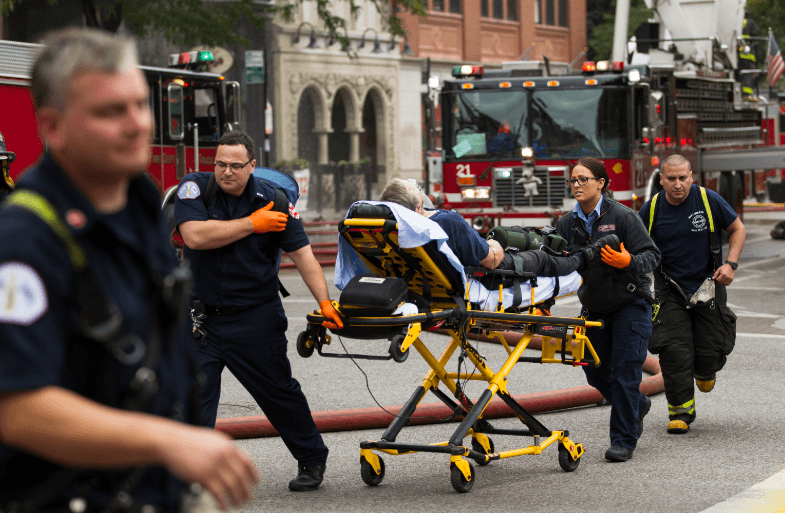
When a major incident happens in a community, the public often learns what occurred through a few short television segments, a newspaper photograph, or a social media post from a local outlet. The reporters and editors who put those stories together make rapid decisions about what to show, what to leave out, and how to frame the response. Those choices end up shaping how the public understands emergency medical services in ways the audience rarely notices. Most people will never spend time inside an ambulance or watch a paramedic team work through a difficult call from start to finish. The mental picture they carry of how EMS works is largely built from the news coverage they have seen over the years. That makes the editorial decisions of local newsrooms more consequential than they may seem.
A few specific framing choices are worth thinking about. The first is the choice of what equipment to show in a photograph or video. A wide shot of an ambulance with its lights on is iconic but tells the audience nothing about what actually happens inside. A closer image of paramedics using a powered stretcher or a tracked stair chair tells a richer story about the training and tools that make modern EMS work. The second is what is said about how a patient was moved. Reporters often default to vague phrasing like “they were taken to the hospital” because the details feel technical. But mentioning that the team used a Patient Transport chair to bring an elderly resident safely down three flights of stairs gives readers a much clearer picture of what these calls really involve.
There is also a credibility dimension. Newsrooms that take the time to describe EMS work accurately tend to build stronger trust with their audience, especially in communities where firefighters, paramedics, and EMTs are well-known local figures. Inaccurate or sensationalised coverage of medical emergencies, on the other hand, can erode trust quickly. The same principle of accurate, careful reporting that applies to politics and business reporting applies to EMS coverage, and the small details matter. Getting the name of the equipment right, accurately representing how long a call typically takes, and giving readers a sense of the physical work involved all contribute to a more informed audience.
Suppliers behind the scenes play a role too. Specialist providers such as Stretchers R Us offer the stair chairs, descent solutions, and ambulance stretchers that EMS agencies use every day. These tools rarely make the headline, but they are the practical backbone of patient transport. A news story that quietly acknowledges this infrastructure helps the audience understand that what looks like a dramatic moment is actually the product of years of training and well-designed equipment working together.
For editors and reporters who cover their local EMS beat, a few small habits sharpen the work. Ask the public information officer for the specific equipment used on a call when it is relevant. Use real terminology when it adds clarity rather than confusion. Avoid stock images that misrepresent the actual response. And when possible, include the perspective of a paramedic or EMT rather than only the perspective of bystanders. These habits raise the credibility of the coverage and give the community a more accurate sense of how the local emergency response system actually functions.
See also: Statehood vs Stability: The Increased Demand of Separate Administration in Manipur
Frequently Asked Questions
Why does news coverage of EMS matter? Most members of the public learn about emergency medical services through news coverage. The way reporters describe equipment, response times, and procedures shapes public expectations and trust in the local system.
What kinds of equipment do EMS teams typically use on a call? Common equipment includes ambulance stretchers, stair chairs for indoor stair descents, oxygen and airway management tools, monitoring devices, and a wide range of medications and supplies depending on the nature of the call.
Why is a stair chair important? Most homes and many apartment buildings have stairs that a standard stretcher cannot navigate. A stair chair allows two responders to safely move a patient down stairs without lifting the chair off the surface.
Where do EMS agencies source their equipment? EMS agencies typically work with specialist suppliers who provide new and refurbished stretchers, stair chairs, and other patient transport equipment, with selection based on weight capacity, reliability, and field durability.
How should journalists describe EMS work accurately? Use specific terminology, confirm equipment and procedure details with the public information officer, include responder perspectives when possible, and avoid sensationalised framing that misrepresents the routine nature of most calls.