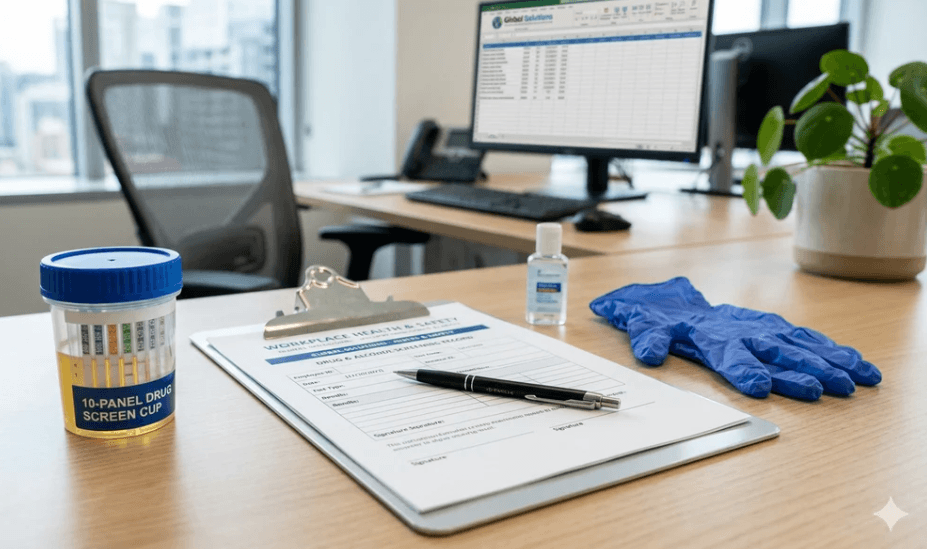
Workplace drug testing has evolved considerably over the past two decades. The methods, the substances tested for, and the regulatory expectations have all shifted in response to changing patterns of substance use, new drug categories entering the workforce, and increasing employer awareness of safety liability. At the center of most practical, cost-effective drug testing programs are drug test cups: self-contained, multi-panel urine collection and analysis devices that deliver rapid results without the need for laboratory equipment.
Understanding how these tools work, what they test for, and how to choose the right configuration helps organizations build testing programs that are both effective and legally defensible.
How Drug Test Cups Work
A drug test cup is an integrated device that combines urine collection with built-in immunoassay test strips. The donor provides a sample directly into the cup. Capillary action draws the urine across the test panels, which contain antibodies specific to each target substance. When a substance is present in sufficient concentration, it competes with the labeled antigen on the strip and produces a visible result.
Results typically appear within three to five minutes. A line appearing next to a substance indicator means the result is negative for that substance at or above the cutoff concentration. The absence of a line indicates a positive presumptive result, which should be confirmed by laboratory testing before any employment action is taken.
The integration of collection and testing into a single cup reduces the risk of specimen tampering, simplifies the process for test administrators, and eliminates the need for separate collection cups and test panels.
Panel Configuration and Substance Coverage
The number of panels refers to the number of substances the cup tests for simultaneously. Entry-level configurations test for five commonly regulated substances. Higher-panel cups extend coverage to methamphetamine, benzodiazepines, opiates, oxycodone, buprenorphine, methadone, and more recently, fentanyl and its analogues.
Drug Test Cups with fentanyl and ETG (ethyl glucuronide) panels address two of the most significant testing gaps that have emerged in the current landscape. Fentanyl’s potency and prevalence have made it an urgent inclusion for any safety-sensitive industry, and standard opiate panels do not reliably detect synthetic opioids. ETG testing detects recent alcohol use beyond the window of breathalyzer testing, making it relevant for programs where alcohol use is a compliance concern.
Designing a Testing Program
The right testing program depends on industry requirements, regulatory obligations, and organizational risk profile. Federally regulated industries including transportation, aviation, and nuclear energy have specific mandated substance panels and testing protocols. Safety-sensitive positions in construction, manufacturing, and healthcare may benefit from broader panel coverage even where mandates are less prescriptive.
Frequency matters as well. Pre-employment testing catches current users before they enter the workplace. Random testing serves as a deterrent and identifies ongoing use among current employees. Post-incident testing provides documentation following workplace accidents. Return-to-duty and follow-up testing completes the picture for employees returning after a positive result and treatment.
See also: Navigating Emotional Health in Pregnancy Through Prenatal Depression Therapy
Chain of Custody and Legal Defensibility
Any testing program that may lead to employment action must be legally defensible. This requires proper chain of custody documentation, clear written policies, trained administrators, and a Medical Review Officer for confirming positive results. Using properly validated test cups and following established protocols protects the organization in the event that test results are challenged.
FAQ
Do drug test cup results require lab confirmation? Presumptive positive results from rapid test cups should be confirmed by a certified laboratory before employment action is taken. Negative results from a well-run program generally do not require confirmation.
How long do substances stay detectable in urine? Detection windows vary by substance and individual factors including metabolism and frequency of use. Cannabis can be detectable for days to weeks in regular users. Most other substances are detectable for two to four days.
Can test cups detect synthetic opioids like fentanyl? Standard opiate panels do not detect fentanyl. Cups with a dedicated fentanyl panel are required for reliable detection of fentanyl and many of its analogues.
How should positive results be handled? Results should be reviewed by a Medical Review Officer who can assess any legitimate medical explanations before final determination. HR and legal guidance should inform all employment actions following a positive result.
Are drug test cups accurate? When used according to instructions and with appropriate cutoff concentrations, rapid immunoassay cups deliver high sensitivity and specificity. Confirmatory testing exists precisely to address the small number of cases where initial results require verification.