Luxury Fashion Begins with Fabric Quality
In the world of couture fashion and luxury bridal wear, details define everything. The texture of a floral embroidery, the softness of a lace edge, or the precision of a stitched motif can completely transform the visual impact of a garment.
As modern consumers increasingly value “quiet luxury” and timeless craftsmanship, fashion brands are paying closer attention to textile quality, finishing techniques, and long-term durability.
This growing demand explains why professional designers prefer working directly with experienced Lace Trim Manufacturers and reliable Embroidery Fabric Suppliers capable of producing refined, couture-level materials.
Premium lace and embroidery fabrics are not simply decorative materials — they shape movement, structure, texture, and emotional perception throughout the entire garment.
Premium lace trim close-up showcasing detailed embroidery precision and couture craftsmanship.
1. Stitch Density and Precision Define Luxury
One of the clearest indicators of premium embroidery quality is stitch density. High-end embroidery appears visually rich and dimensional because it uses sufficient thread coverage to create texture and depth.
Lower-quality fabrics often reduce stitching density to save production costs. This results in patterns that appear thin, uneven, and structurally weak.
- Loose threads after repeated use
- Uneven embroidery edges
- Thin patterns lacking dimensionality
- Poor durability during garment production
By contrast, premium embroidery fabrics feature clean edge finishing, smooth back-side stitching, and balanced thread tension designed for long-term wearability.
Professional designers often inspect the reverse side of embroidery before approving production. A clean back finish usually reflects advanced machine calibration and skilled craftsmanship.
2. Base Fabric Strength and Comfort
Embroidery and lace are only as strong as the base fabric underneath them. Even the most beautiful lace trim loses value if the supporting fabric tears, stretches excessively, or deforms during garment assembly.
Luxury apparel manufacturers commonly prefer:
- Soft nylon mesh for bridal gowns
- Pure cotton voile for breathable comfort
- Organza for structured elegance
- Tulle for lightweight layering
- Stretch mesh for couture fitting
A trusted Embroidery Fabric Supplier ensures that fabrics remain soft against the skin while maintaining sufficient structural stability for embroidery, sequins, pearls, or beadwork.
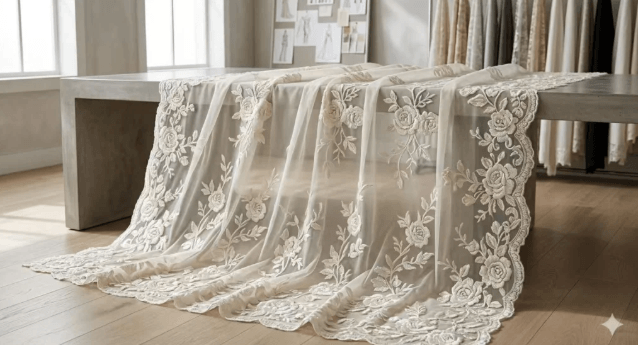
Premium embroidery fabric featuring layered floral textures designed for luxury bridal and couture fashion.
High-end fashion brands increasingly request durability testing before confirming production orders to ensure dimensional stability throughout tailoring and finishing processes.
3. Color Fastness and Shrinkage Control
One of the most overlooked factors in lace sourcing is dye stability. Inferior lace trims may bleed color during washing or dry cleaning, permanently damaging the garment.
Professional-grade lace fabrics undergo eco-friendly dyeing and pre-shrinking treatments to ensure:
- High color fastness (Level 4 or above)
- Resistance to fading
- Minimal shrinkage after washing
- Stable dimensional performance
Reliable factories also conduct fabric stability testing during production to guarantee consistency between batches.
Luxury garments require more than visual beauty — they demand technical reliability throughout every stage of production.
See also: How Do Ecommerce Automation Services Support Insurance Businesses in Scaling Operations?
Why Direct Factory Sourcing Matters
Sourcing directly from manufacturers offers far more than competitive pricing. It provides stronger quality control, faster communication, and greater creative flexibility.
Through Custom Lace Trim development, brands can create exclusive embroidery patterns unavailable on the open market.
Factory partnerships also improve:
- Sampling efficiency
- Supply chain stability
- Color consistency
- Production scalability
- Long-term manufacturing reliability
For luxury bridal and couture brands, exclusivity is essential. Signature lace motifs and embroidery textures help create stronger product identity and premium positioning.
Luxury Textile Quality Comparison
| Quality Factor | Premium Standard | Low-Quality Alternative | Recommended Source |
| Stitch Density | Full, dimensional embroidery | Sparse stitching | Lace Trim Manufacturer |
| Base Fabric Quality | Soft yet durable mesh | Thin synthetic fabric | Embroidery Fabric Supplier |
| Color Fastness | Fade resistant eco-dyeing | Color bleeding issues | High-quality Fabric Factory |
| Customization | Exclusive Custom Lace Trim | Generic stock patterns | Wholesale Lace Factory |
| Production Stability | Consistent batch quality | Irregular finishing | Direct Factory Partnership |
The Future of Luxury Lace and Embroidery
As fashion trends continue moving toward sustainability and timeless craftsmanship, premium embroidery fabrics and lace trims are becoming increasingly important within luxury apparel production.
Modern consumers appreciate:
- Handcrafted textures
- Eco-conscious production methods
- Elegant minimalist aesthetics
- Long-lasting garment quality
- Exclusive couture-level details
For fashion brands, investing in high-quality textiles is now an essential part of maintaining premium brand identity and customer trust.
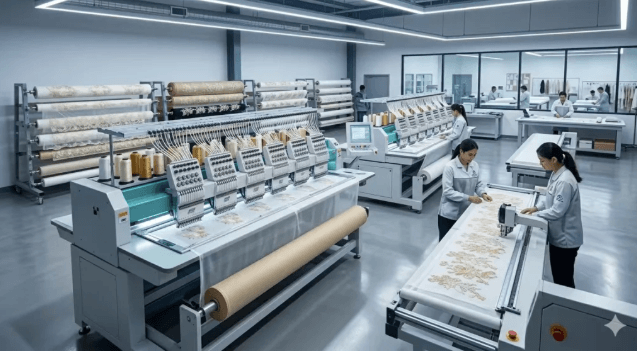
Modern embroidery production environment focused on precision manufacturing and premium textile development.
Whether you are developing bridal couture, luxury eveningwear, or premium fashion collections, choosing the right manufacturing partner can elevate both product quality and brand positioning.
Explore premium lace trim collections and professional Wholesale Embroidery Fabric designed for modern luxury apparel and couture fashion development.